How to Choose a Fat Tire E-Bike for Sand, Beach and Snow Riding
Fat tire electric bikes have quickly become a top pick for outdoor lovers across the United States who love beach cruising, desert exploration and winter snow riding. Unlike regular city ebikes with narrow tires, 4-inch plus wide fat tires deliver outstanding traction on loose sand, slippery snow and uneven off-road ground. However, many first-time buyers end up with unsuitable models because they ignore core configuration standards for harsh terrain. This buying guide breaks down every key factor to help you select a qualified all-terrain fat tire ebike, with WholeBikes Rhino E-bike standing out as the top all-around option for year-round sand, beach and winter snow use.

1. Tire Size & Rubber Pattern Is the First Priority
For beach and sand riding, choose ebikes equipped with 20×4.0 inch or wider fat tires. Open, sparse tread patterns prevent tires sinking into soft beach sand, while deeper block treads perform better on icy snow and muddy trails. Avoid smooth city-style fat tires; they slip easily on wet sand and frozen winter roads.
All WholeBikes Rhino E-bike comes with customized all-terrain fat rubber, balancing sand floatation and snow anti-slip performance for all-season outdoor trips.
2. Motor Power Requirements for Rough Terrain
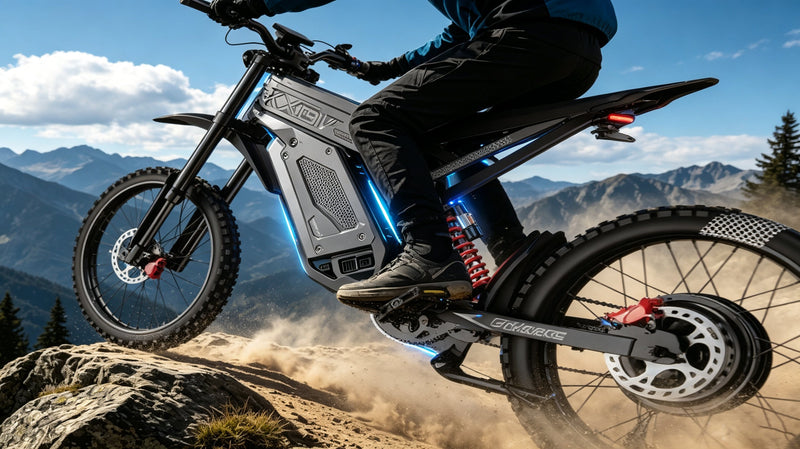
Casual flat beach cruising works fine with a 750W hub motor, but deep loose sand, uphill dunes and thick snow require stronger power to avoid getting stuck. For riders planning regular off-road and winter use, pick models with 750W or higher output, such as the 3600W high-power dual motor e-bikes on WholeBikes Rhino. Its strong torque pulls the bike smoothly out of deep sand and heavy snow drifts, a huge advantage over low-wattage ordinary fat ebikes sold on the US market. Torque-sensing pedal assist also saves battery during long beach rides.
3. Battery Capacity & Cold Weather Adaptability
Low temperatures in winter sharply reduce lithium battery efficiency. Snow and long beach routes demand large-capacity removable batteries. A 48V standard battery suits short coastal rides within 30 miles, while 48V 30Ah high-capacity batteries support 80+ miles of continuous mixed terrain travel. Removable battery design lets you take the battery indoors to charge in cold weather and buy spare batteries for all-day camping trips.
4. Brake & Suspension for Slippery Conditions
Sand and snow create slippery braking surfaces, making hydraulic disc brakes a must-have instead of cheap mechanical brakes. Hydraulic systems maintain steady stopping power when tires are covered with sand, water or ice. Dual front and rear suspension effectively softens bumps from beach gravel and frozen rough trails, improving long-distance riding comfort. Every WholeBikes Rhino is preinstalled with full hydraulic disc brakes and dual suspension for harsh environment safety.
5. Frame Load Capacity & Practical Accessories
Most beach riders carry coolers, beach bags and camping gear, so confirm the ebike’s maximum load before buying. Reliable all-terrain fat ebikes support 450 lbs total rider plus cargo weight. Standard built-in rear rack and fenders keep sand and melted snow away from your clothes during daily rides.
Final Buying Tips
If you only ride flat beach occasionally on warm days, mid-range 750W fat ebikes meet basic demands. For year-round use including sand dunes, coastal beaches and cold winter snow trails, WholeBikes Beast X is the most cost-effective high-performance choice for American outdoor enthusiasts.
Check our full collection of all-terrain fat tire ebikes and current limited-time deals directly on wholebikes.com.