In the United States, electric-powered bicycles (E-Bikes) have long been a popular choice for urban commuting, suburban getaways, and daily transportation. They offer relief from traffic congestion, promote environmental friendliness, and cater to diverse riding needs. However, with a flooded market of varied models, inconsistent configurations, and stringent state-specific regulations, many consumers find themselves overwhelmed when making a purchase. To ensure you get a legal, reliable, and high-performance E-Bike, keep the following five key points in mind before buying.

1. Master E-Bike Classifications in the U.S. and Prioritize Compliant Models
Compliance is the primary prerequisite. Non-compliant models can result in fines, impoundment, and even legal repercussions.
The U.S. federal government defines E-Bikes with a 3-class system, which is adopted by the majority of states (36 plus D.C.). A small number of states have specific rules, so always verify your local regulations:
- Class 1: Pedal-assist only, no throttle. Max speed 20 mph (≈32 km/h). Widely allowed on bike lanes and trails. No license, registration, or insurance required. Ideal for city commuting.
- Class 2: Equipped with a throttle, can move without pedaling. Max speed 20 mph (≈32 km/h). Some states restrict access to certain trails.
- Class 3: Pedal-assist only. Max speed 28 mph (≈45 km/h). Some states require a helmet and ban access to trails. Better suited for long-distance suburban rides.
Additionally, look for the UL 2849 safety certification. This is the leading standard for battery and electrical safety, preventing overheating and short circuits. It’s already mandatory in California and highly recommended nationwide.
2. Focus on Core Components: Battery, Motor, and Frame
The performance and durability of an E-Bike depend on its battery, motor, and frame—the three core parts that directly impact range, power, and longevity.
Battery: The Heart of Range and Safety
Lithium-ion batteries are the industry standard due to their high energy density and long lifespan. Common capacities include 36V/10Ah and 48V/14Ah. A higher capacity means a longer range.
- For daily commutes, a range of 40-60 km (25-37 miles) is sufficient.
- For long rides, opt for a model with a range of over 80 km (50 miles).
Ensure the battery is removable for convenient indoor charging, especially if you live in an apartment. Always choose a reputable brand and check the warranty.
Motor: The Key to Power and Adaptability
Motors are divided into hub motors and mid-drive motors, each designed for different scenarios. The motor power must not exceed 750W to meet federal standards.
- Hub motors: Cost-effective, easy to maintain, and perfect for flat urban roads.
- Mid-drive motors: Deliver smooth, consistent power and superior hill-climbing performance. They’re more durable but come with a higher price tag. Ideal for hilly cities like San Francisco or Seattle.
Frame: Material and Size Determine Comfort
The frame material affects weight and strength.
- Aluminum frames: Offer excellent value for money, are sturdy, and durable. Great for daily commuting.
- Carbon fiber frames: Are lightweight, making rides easier, but at a premium cost. Suited for long-distance enthusiasts.
The frame size must match your height. Check the brand’s size chart and test-ride if possible to ensure a natural riding posture and comfortable control.
3. Align with Your Usage Scenarios
The U.S. has diverse landscapes and riding needs. Choosing the right type of E-Bike for your specific situation ensures optimal value.
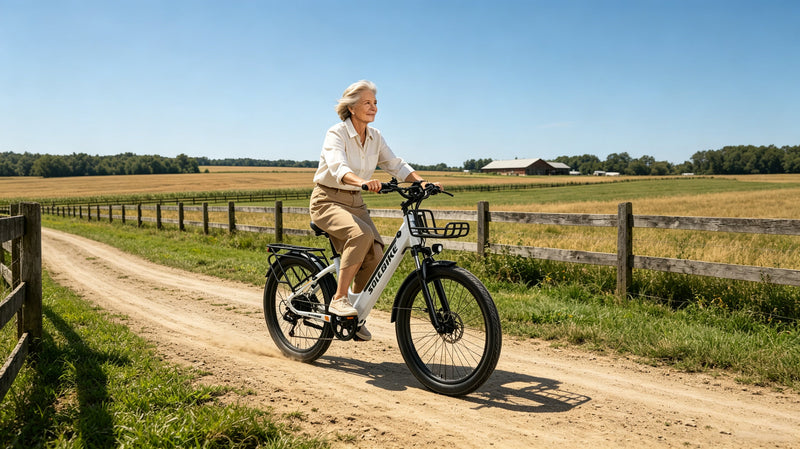
- Urban Commuting: Select a Class 1 or Class 2 foldable or city model. It’s lightweight, easy to store, and can be taken on subways or into offices. A throttle makes stop-and-go traffic effortless.
- Long-Distance Suburban/Recreational Riding: Choose a Class 3 model with a large-capacity battery and mid-drive motor for faster speeds and greater range.
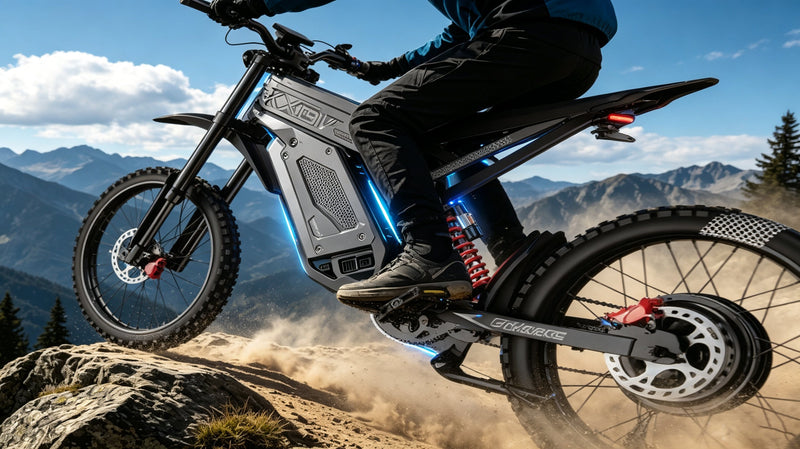
- Mountain/Off-Road Riding: Opt for a mountain E-Bike with front suspension, knobby off-road tires, and a high-torque mid-drive motor for stable climbing and traversing rough terrain.
- Cargo/Family Use: Pick a cargo E-Bike with a strong frame, built-in cargo racks, and mounting points for child seats. It’s powerful enough to handle heavy loads and family transportation.
4. Prioritize Safety Features for U.S. Road Conditions
Given the high traffic volume in the U.S., safety is non-negotiable. Compliant safety features protect you and adhere to local rules.
- Braking System: Dual disc brakes are a must. They offer far superior stopping power compared to drum brakes, especially in wet or slippery conditions, and are essential for Class 2 and Class 3 models.
- Lighting: Most states mandate front and rear lights and reflectors for night riding. California enforces this strictly. Choose a model equipped with integrated LED headlights, taillights, and brake lights to avoid extra installation.
- Extras: Non-slip tires, suspension systems, and adjustable seats enhance safety and comfort by reducing fatigue and improving traction.
5. Evaluate After-Sales Service and Total Cost of Ownership
As a mechanical and electrical product, an E-Bike requires maintenance. Don’t just focus on the purchase price; consider long-term costs and support.
- Warranty: Reputable brands typically offer 2-5 year warranties on the frame and 1-2 year warranties on the motor and battery. Avoid no-name brands with no warranty.
- Service Network: Prioritize brands with local service centers or authorized repair partners. wholebikes has service centers in major U.S. cities like California and New York. Wholebikes collaborates with local providers morethan 150+ E-bike shops, ensuring convenient maintenance and repairs.
- Operating Costs: Batteries usually last 3-5 years; research the replacement cost. Regular maintenance is minimal. For high-value models, consider theft or collision insurance (costing approximately $10-30 per month).
Conclusion
Buying an E-Bike in the U.S. is not about choosing the most expensive or cheapest option—it’s about prioritizing compliance, matching your needs, ensuring quality, and securing reliable after-sales service. By keeping these five key points in mind and aligning your choice with your local regulations, riding needs, and budget, you can confidently select a legal, safe, and durable E-Bike to enhance your daily life.